
Pre-employment and exit medicals
A baseline medical before someone starts, so you know their health at the outset, and an exit medical when they leave, so any change is on record.
Occupational health
Your team, declared fit for work without leaving site. BMS Holdings does occupational medicals with two mobile units that come to your premises, and at our clinic in Century City for smaller groups and walk-ins.
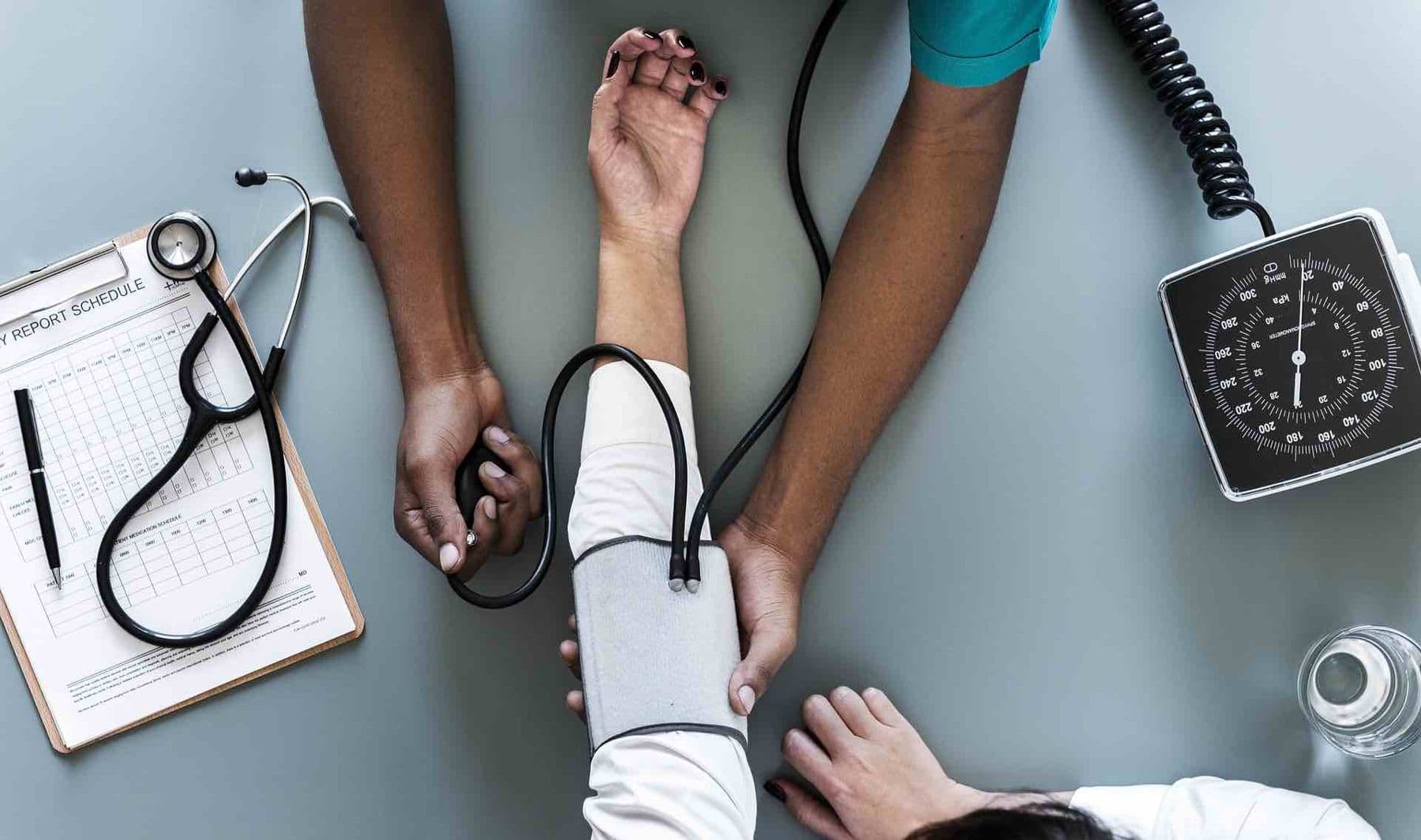
Occupational medicals confirm that each employee is healthy and fit for the work they do. They pick up early signs of work-related ill health, such as hearing loss from noise or lung damage from dust, while there's still time to act.
They're also a legal duty. Section 8 of the Occupational Health and Safety Act 85 of 1993 requires every employer to provide a workplace that is safe and without risk to health, and specific regulations then set which medicals apply to which work, and how often. Catching problems early protects your people, and it saves your business the cost of claims, absenteeism and lost production.
We also do medicals for drivers and machine operators, employees who work at height, and employees exposed to asbestos, dust or hazardous chemicals. If you're not sure which medicals your people need, start with a health risk assessment (see below).
A baseline medical before someone starts, so you know their health at the outset, and an exit medical when they leave, so any change is on record.
Regular medical surveillance for employees exposed to health risks such as noise, dust or chemicals, including audiometry and spirometry where needed.
The certificate of fitness every construction worker needs under the Construction Regulations 2014, based on the hazards of their specific job.
Medicals and questionnaires for people who handle food, to support your food safety and hygiene compliance.
Our two mobile medical units are fully equipped for physical examinations, vision screening, audiometry and spirometry. They park at your premises, your employees step out of work for their medical and step back in, and your production keeps running. This is usually the best option for groups and for sites outside the city centre.
For smaller numbers, new appointments and walk-ins, our clinic at The Colosseum, Century Way, Century City is the quicker option.
A standard physical examination is done by an occupational health nurse and usually includes:
Depending on the job, we add audiometry (hearing), spirometry (lung function) or a referral for a chest X-ray, for example for asbestos exposure.
With modern equipment, these are typical times per person:
| Test | Typical time |
|---|---|
| Physical examination | 10–30 minutes, depending on the medical type and the person's history |
| Vision screening | About 10 minutes |
| Audiometry | About 10 minutes |
| Spirometry | 5–10 minutes |
Each employee receives a certificate of fitness, signed off by an occupational health nurse registered with the South African Nursing Council (SANC).
That's the question we're asked most, and the honest answer is that it depends on what your people are exposed to. The most accurate way to find out is a health risk assessment or occupational hygiene survey. We look at the work, the exposures (noise, dust, chemicals, biological agents, heights, driving) and the regulations that apply, then give you a medical surveillance plan: who needs which medical, and how often.
| Law | Section | What it requires |
|---|---|---|
| Occupational Health and Safety Act 85 of 1993 | Section 8 | Employers must provide and maintain a working environment that is safe and without risk to the health of employees. |
| Construction Regulations 2014 | Regulation 7(1)(g), Annexure 3 | Construction employees must have a valid medical certificate of fitness for their specific work, issued by an occupational health practitioner. |
| Foodstuffs, Cosmetics and Disinfectants Act 54 of 1972 | Food hygiene regulations | Food premises must ensure food handlers do not pose a health risk to the food they handle. |
| Hazardous biological agents regulations under the OHS Act | Medical surveillance provisions | Medical surveillance for employees exposed to hazardous biological agents. |
| Noise-induced hearing loss regulations under the OHS Act | Medical surveillance provisions | Audiometric surveillance for employees exposed to noise at or above the noise rating limit of 85 dB(A). |
Every employee should have a baseline medical when they start, and after that it depends on their exposure. Annexure 3 certificates for construction work are valid for up to 12 months. For other exposures, the regulation for that hazard and the occupational health practitioner set the interval, and an annual medical is standard practice. Some exposures, such as high noise levels, call for more frequent checks.
Only an occupational health practitioner can declare a worker fit, such as a nurse who has specialised in occupational health and is registered with the South African Nursing Council (SANC). At BMS, every certificate of fitness is signed off by a SANC-registered occupational health nurse.
PLH stands for Possible Loss of Hearing. It's the result reported when audiometry picks up a change in an employee's hearing compared to their baseline. Testing can be done in a soundproof booth or with modern booth-free equipment.
Yes. Our mobile units are set up to run medicals efficiently at your site, and with typical test times of 10 to 30 minutes per person we can plan a schedule around your shifts. Tell us your headcount and medical types, and we'll quote and plan the day for you.
Construction workers need an Annexure 3 medical certificate of fitness under the Construction Regulations 2014. It usually includes a physical examination, audiometry and spirometry, and is based on the hazards of the person's job. Workers exposed to asbestos also need a chest X-ray before they can be declared fit.
Get in touch
Tell us how many people need medicals, which types and where, and we'll send a quote and a proposed schedule.