BMS HoldingsBusiness Made Safe

SHEQ SERVICES · THERMAL IMAGING

Thermal imaging inspections

We scan your electrical distribution boards (DB boards), switchgear, motors and plant with a thermal camera to find components running hot, before they fail, stop production or start a fire. You get a written report with a thermal image and a normal photo of every finding, showing what to fix and how urgently. We do thermal imaging inspections for sites in Cape Town.

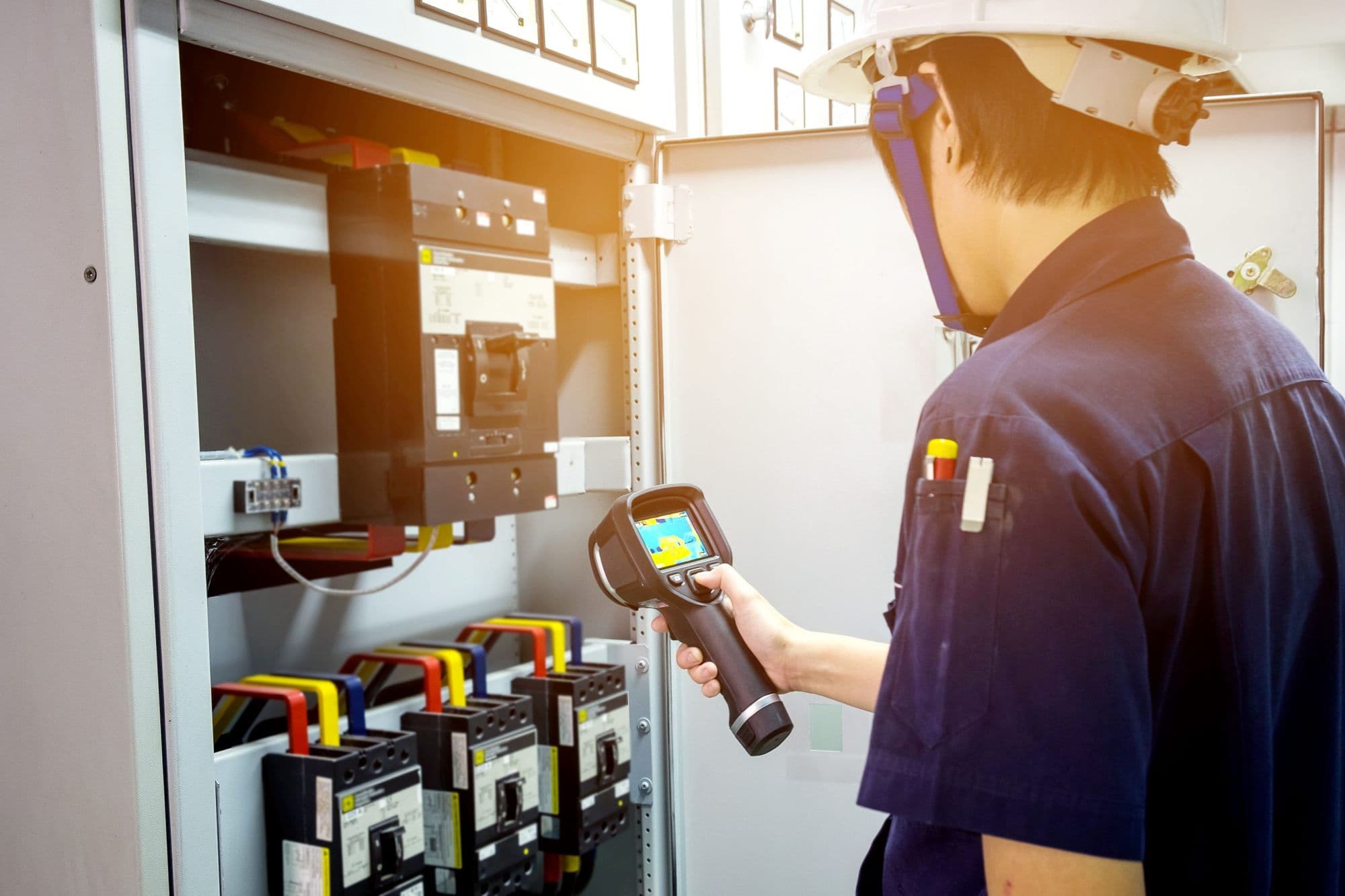
Technician scanning an electrical distribution board with a thermal imaging camera

Most failures warn you first, if you can see heat

Every business wants to produce more and stop less. Unplanned downtime is expensive, and an electrical fault that turns into a fire is far worse.

Most electrical and mechanical failures give an early warning: heat. A loose connection, an overloaded circuit, a failing breaker or a worn bearing all run hotter than they should, often weeks or months before they fail. You can't see that heat with the naked eye, but a thermal imaging camera can.

A thermal imaging inspection finds those components early, while the equipment is running normally. That gives you time to decide on the right corrective action and plan the repair for a convenient moment, instead of dealing with a breakdown in the middle of a shift.

What a thermal scan shows

Each problem shows up as a hot spot: a component running noticeably hotter than similar components under the same load.

Finding 01

Loose or corroded connections

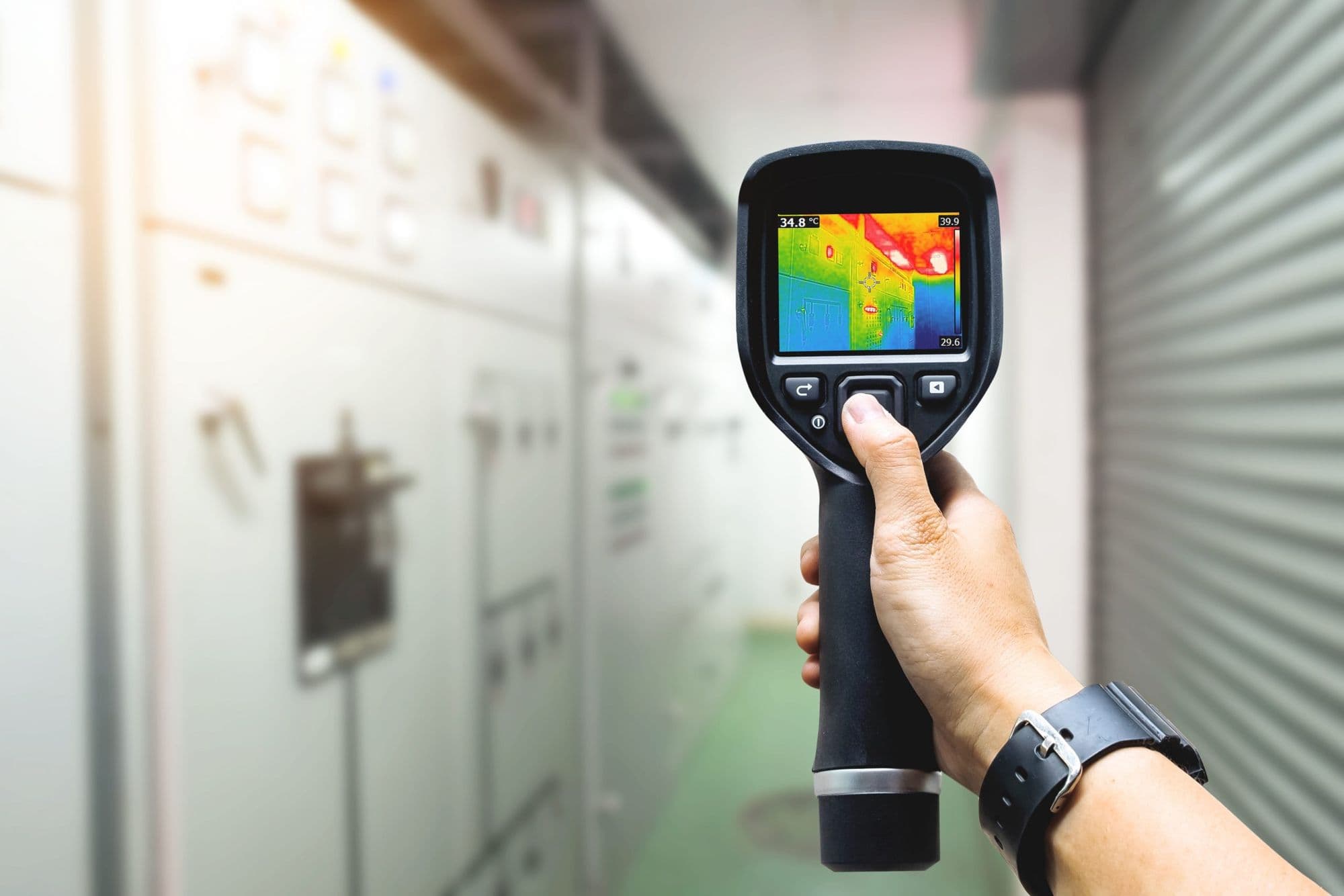
On the thermal image, a single terminal, lug or breaker connection glows hotter than its neighbours. It usually means a loose, corroded or undersized connection, which an electrician should tighten, clean or replace before it burns out or starts a fire.
Finding 02

Overloaded circuits and unbalanced loads

One phase, cable or breaker shows up warmer than the others feeding the same board. That points to a circuit carrying more than it should or a load that isn't shared evenly, so the circuit needs to be checked and the load redistributed or upgraded.

Finding 03

Failing bearings and motors

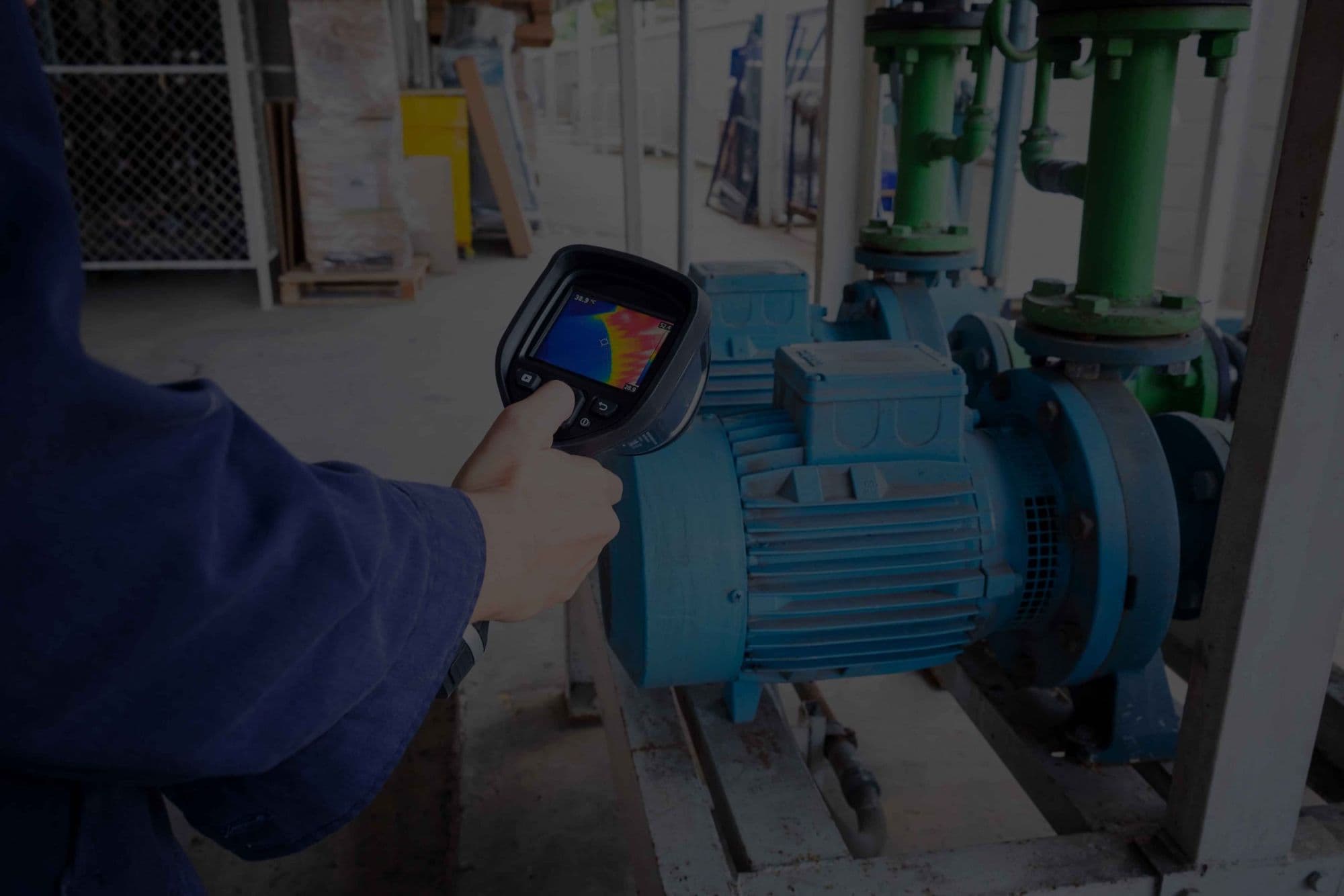
A motor housing, bearing or coupling shows up hotter than the same part on similar machines. It often means wear, poor lubrication or misalignment, and planning the repair now avoids an unplanned breakdown in the middle of a shift.

Technician scanning an electrical distribution board with a thermal imaging camera
Thermal camera showing hot spots on switchgear in an electrical room
Thermal camera checking a pump motor for overheating bearings

BMS thermal imaging inspections: distribution boards, switchgear and motors scanned under normal load.

What's included

  • A thermal scan of electrical distribution boards (DBs), main switchboards and isolators under normal load
  • Scans of motors, drives, pumps, compressors, conveyors and bearings on request
  • A thermal image and a normal photo of every finding, so it's easy to locate
  • Temperature readings compared with similar components and ambient temperature
  • Each finding ranked by severity, from "monitor" to "repair immediately"
  • Recommended corrective actions for your electrician or maintenance team
  • A written report you can share with maintenance, management and your insurer or auditor
  • Re-scans after repairs to confirm the fault is fixed

How it works

  1. Scope. Tell us how many sites and roughly how many DB boards and machines need scanning.
  2. Plan the visit. We schedule the scan for when your equipment is running under normal load, because faults only show up under load.
  3. Scan. A BMS technician scans each board and item of equipment, working with your electrician or maintenance person to open panels safely.
  4. Report. You receive a report with thermal images, severity ratings and recommended actions.
  5. Re-scan. After repairs, we re-scan to confirm each problem has been fixed. Many clients book a scan every year as part of planned maintenance.

Who it's for

  • Manufacturing and food processing plants, where an unplanned stop means lost product and missed deliveries
  • Warehouses and cold storage, with high electrical loads from refrigeration, lighting and charging
  • Commercial and office buildings, for fire prevention in DB rooms and risers
  • Facilities managers who need evidence that electrical installations are being maintained
  • Businesses preparing for an audit, where proof of electrical maintenance is requested

FAQ

Thermal imaging questions

Can't see yours? Call us on 064 549 5312.

What does a thermal imaging inspection find?

A thermal imaging inspection finds components running hotter than they should, which usually means a problem. In electrical boards this includes loose or corroded connections, overloaded circuits, failing breakers and unbalanced loads. On machinery it shows worn bearings, misaligned shafts, overheating motors and blocked cooling, often long before the item actually fails.

Do you need to switch off our equipment?

No. Thermal imaging must be done while equipment is running under normal load, because that's when faults generate heat. Panels are opened safely with your electrician or maintenance person, and production carries on as normal. That's one of the biggest advantages over inspections that need a shutdown.

How often should we do a thermal scan?

Most businesses scan their electrical installations once a year as part of planned maintenance. Critical plant, high-load boards and equipment with a history of faults may need scanning every six months. Always re-scan after repairs to confirm the fault has been fixed.

Will you fix the faults you find?

We find, document and rank the faults, and recommend what needs to be done. The repairs themselves should be done by your registered electrician or maintenance team. Once they've finished, we come back and re-scan to confirm each problem is solved.

Get in touch

See the problem before it stops you

Tell us how many sites and DB boards you have, and we'll quote for a thermal scan.

Start a full quote